
Table of Contents
- Signal at Sea: The Broadcast Challenges
- How Omid Technologies Deployed IPTV on the Persian Gulf Terminal
- IPTV at Sea: What This Project Proves?
- Comments
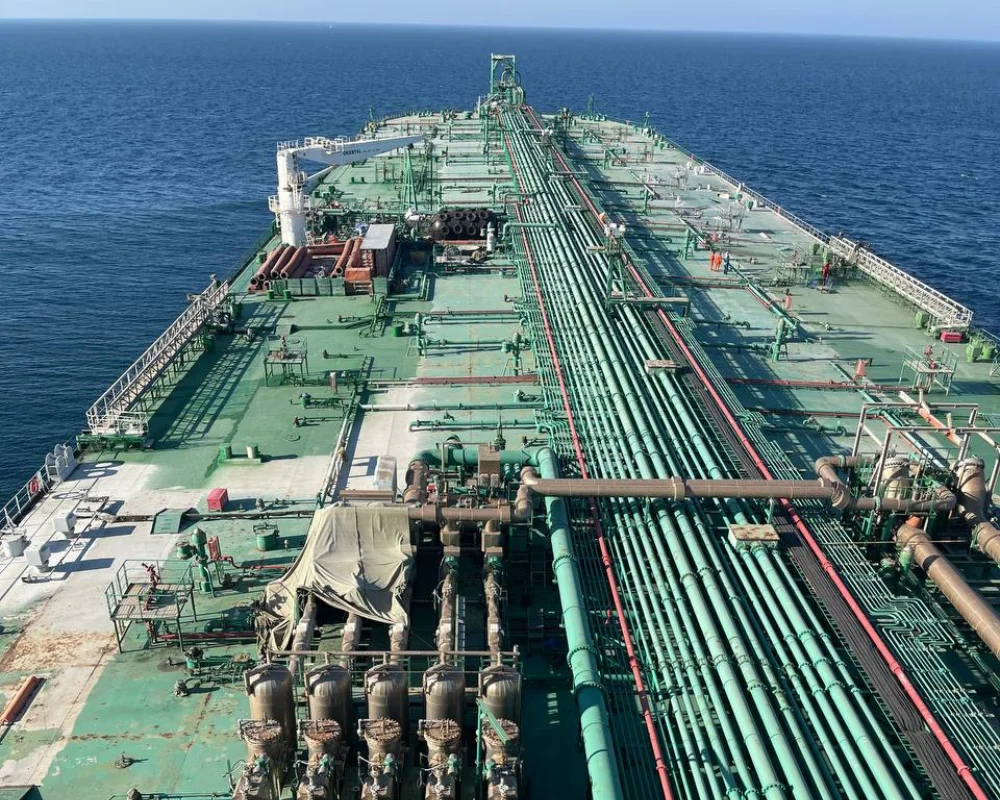
Delivering stable television service on land is straightforward. Delivering it on a massive floating structure in the middle of the Persian Gulf is an entirely different challenge. The Persian Gulf Floating Oil Terminal operates in one of the most demanding marine environments in the Middle East. Its crew members live and work far from shore, often for extended periods. Access to news, entertainment and broadcast content is not a luxury for them. It is a genuine operational and welfare necessity.
This post walks you through how Omid Technologies designed and deployed a fully functional IPTV system aboard this offshore facility. You will learn what made this environment so technically demanding, which solutions we selected and how every stage of the project was executed. Whether you manage an offshore platform, an industrial complex or any facility with similar connectivity challenges, this project demonstrates what modern IPTV infrastructure can achieve in even the harshest conditions.
Signal at Sea: The Broadcast Challenges
The Persian Gulf Floating Oil Terminal does not sit still. Like a giant vessel, it constantly shifts position on the water’s surface. This movement made traditional fixed satellite antennas completely impractical. Any conventional antenna system would lose its signal lock within minutes, leaving crew members with no reliable broadcast reception.
The consequences extended beyond simple inconvenience. Without stable television access, the facility had no effective way to distribute emergency announcements or operational updates across its various sections. The existing infrastructure also relied on outdated coaxial cabling, which deteriorated quickly under high humidity, salt exposure and extreme heat.
Deploy IPTV/RFTV in your platform
How Omid Technologies Deployed IPTV on the Persian Gulf Terminal
Assessing the Environment and Designing the System:
Every successful deployment begins with a thorough site assessment. Our engineers evaluated the terminal’s physical layout, crew size, and the specific constraints of a marine environment. Signal stability, equipment durability and remote management capability were the three pillars guiding every design decision. The final plan specified display locations, internal network architecture and all infrastructure requirements needed for a reliable, long-term IPTV system.
Selecting the Right Equipment for Offshore Conditions:
Standard broadcast equipment is not built for offshore environments. The system was designed around satellite signal reception, ensuring consistent content delivery regardless of the terminal’s position. Crucially, we integrated an Auto Tracker system into the setup. This technology allows the antenna to follow satellite signals continuously, even as the terminal moves across the water. It eliminates signal interruption entirely, delivering unbroken reception at maximum quality.
Installation, Configuration and Network Setup:
Transporting equipment to the terminal required careful coordination with marine logistics teams. Once aboard, our technicians installed the central IPTV Headend server and configured all relevant frequencies. A dedicated internal LAN network was built to distribute content across every section of the terminal. This network gave each crew member access to interactive television features directly from their quarters and common areas.
Testing, Optimization and Staff Training:
No deployment is complete without rigorous testing. Every zone was checked for image quality and network stability before sign-off. Following successful validation, Omid Technologies conducted a structured training program for the terminal’s technical team. Staff learned to manage the system independently, adjust settings and handle routine maintenance, ensuring long term operational confidence without relying on external support.
IPTV at Sea: What does this project proves?
The Persian Gulf Floating Oil Terminal project proved that robust IPTV deployment is fully achievable in the most demanding marine environments. A constantly shifting platform, corrosive salt air and complex offshore logistics presented significant obstacles, yet careful engineering, Auto Tracker technology, and a structured LAN-based infrastructure resolved each one. Crew members now access stable, high-quality broadcast content around the clock, while management distributes safety announcements and operational updates instantly across every screen. Compared to traditional coaxial systems, the new infrastructure also reduces long-term maintenance costs considerably. This project establishes a clear benchmark for offshore and industrial IPTV deployments across the region, and Omid Technologies remains ready to bring the same standard of execution to any facility; however remote or challenging the environment may be.